
 |
|
|
|
||||||
|
SPRING 2016 FALL 2016
regular courses
irregular courses
|
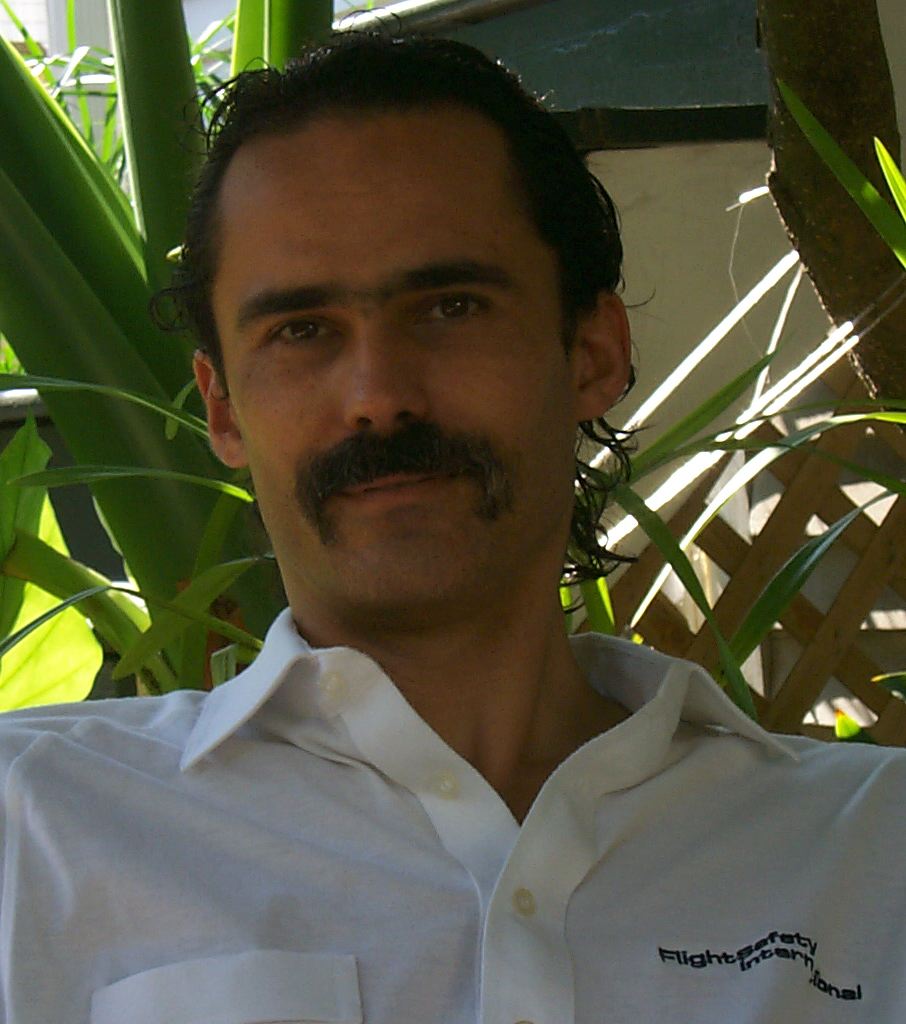
Prof. Howard spent his senior year of
college in Seville, Spain, studying Spanish, German and
Arabic and the culture of Andalucia, and stayed on for two
more years teaching English. He returned to UNC-Chapel
Hill to pursue a Master's in linguistics and then
transfered to Cornell to complete a doctorate in Spanish
syntax under the guidance of Margarita Suñer in 1993. He
then taught for three years in the Spanish department at
Rutgers before moving to New Orleans to teach in the Dept.
of Spanish and Portuguese at Tulane University, where he
earned tenure. The Federal Levee Failure of 2005 ? you may know it as hurricanes Katrina and Rita, see levees.org ? was a watershed event in his life and career. After a seven-week evacuation to his parents' house in Savannah, Ga., he came back to a battered and prostrate city. He began to help out the best he could, and volunteered to be a poll commissioner for the Parish of Orleans. Professionally, he won a grant from the newly created School of Liberal Arts under Dean George Bernstein to further his research in computational neuroscience through the creation of the Sociocognitive Robotics Lab, as well as to advance to the next phase in his research program by attending a summer course in EEG at Electrical Geodesics Inc. in Eugene, Or. Given that his research is heavily
invested in computational modeling, and facing the
dissolution of the Dept. of Computer Science and
Electrical Engineering as part of Tulane's response to the
dire circumstances following the Federal Levee Failure,
Prof. Howard began looking for ways to maintain the
teaching of computer programming at Tulane. He won a Duren
Professorship to teach an introduction to
programming using the LEGO
Mindstorms NXT robots in the spring of 2008, and is
teaching a TIDES
course, Object-Oriented Programming through Video Games,
using Carnegie Mellon's innovative Alice
3D programming environment in the fall of 2008.
|
research 
My News
last update August 25, 2014
|
||||